Skip to content





For most of the last fifty years, psychedelic mushrooms were a punchline. A thing teenagers did at festivals. Then the research caught up, and the story got a lot more interesting. It turns out psilocybin, the active compound in those mushrooms, does something to the brain that scientists are still catching their breath over. It loosens the wiring. Makes the brain briefly more flexible, more open to change, in a way that might help people stuck in depression or anxiety for years.
The Brain’s Capacity for Change: How Psilocybin Initiates Neuroplasticity
Your brain isn’t fixed. It rewires itself constantly, a property called neuroplasticity, building and pruning connections based on what you do, think, and feel. The catch is that this works for the bad stuff too. Depression and anxiety carve deep grooves, the same dark thoughts running the same tracks until they feel automatic. Psilocybin seems to crack that open. It triggers a surge of plasticity, a window where neurons sprout new connections and old patterns lose their grip. For a stretch of time, the brain gets unusually willing to change.
Psilocybin and Mental Health Treatment: Clinical Evidence From Recent Research
Johns Hopkins researchers reported that psilocybin-assisted therapy led to substantial reductions in depression that lasted up to a year for many participants, with close to half in remission, though they stressed it was done under careful conditions with heavy preparation and trained support.
Anxiety has responded too, especially in people facing serious illness. None of this makes it a miracle, and it doesn’t work for everyone.
How Therapeutic Doses Differ From Recreational Use
Same mushroom, completely different experience. Recreational use and therapeutic use share a molecule and not much else. In a clinical setting, everything around the dose is built for safety:
- Screening first, to rule out people for whom it’s risky.
- Real preparation, so you know what you’re walking into.
- A calm, controlled space, with trained people there the whole time.
- Therapy afterward to make sense of what came up.
Take the same substance at a party, with none of that scaffolding, and it’s a roll of the dice. The molecule isn’t what heals. The container around it is.
| Recreational use | Therapeutic use |
| Taken to get high or for fun | Taken to work on something specific |
| No screening or preparation | Medical screening and prep beforehand |
| Wherever, however, often alone | A safe, guided, supported setting |
| You are on your own afterward | Integration work to make it stick |
The Role of Set and Setting in Treatment Outcomes
There’s an old phrase in psychedelic research, set and setting, and it carries more weight than the dose. Set is your mindset walking in. The setting is the environment around you. Together they shape the whole experience. What that breaks down to:
- Your mindset going in, your mood, your intentions, what you’re carrying.
- A calm, safe physical space with no nasty surprises.
- Trained, trusted people present the whole way through.
- Enough felt safety to let go instead of bracing against it.
Microdosing Psychedelic Mushrooms: Small Doses, Significant Brain Changes
The other part of the story is microdosing. Every few days, a small amount (not enough to get high) is thought to help with mood, concentration and reduce anxiety without the high. There are many people who swear by this. The science isn’t as pretty as the hype:
- The anecdotes are everywhere, and a lot of people feel it helps.
- The rigorous studies are mixed, and the placebo explains a real chunk of it.
- It’s still illegal in most places, with no quality control on what you get.
- The long-term effects of regular low doses simply aren’t well studied yet.
So microdosing sits in a real gray area. Promising enough to keep researching. Nowhere near proven.
Consciousness Expansion and Neural Network Reorganization
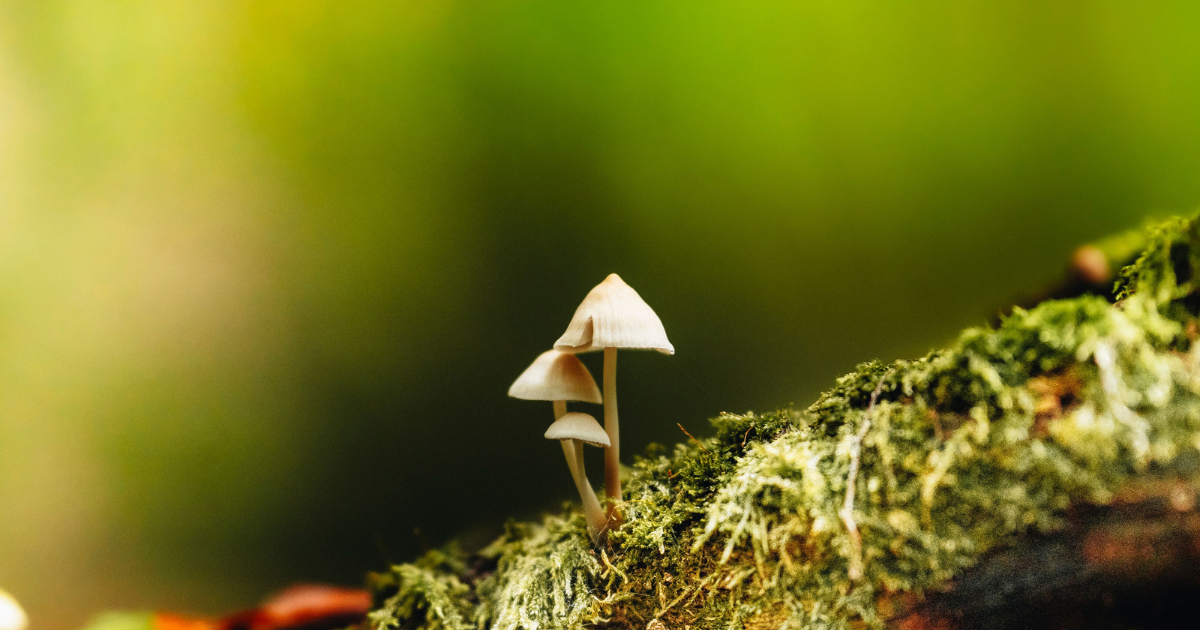
During a full psilocybin experience, something strange happens to how the brain talks to itself. Regions that normally keep to their own lanes start lighting up together. The usual hierarchies relax. Connectivity spikes across areas that don’t normally chat. People describe it as consciousness expansion, a sense of boundaries dissolving, of seeing themselves and their problems from somewhere new.
Depression Relief Through Psilocybin: Rewiring Negative Thought Patterns
Put the pieces together and you can see why depression sometimes lifts. The plasticity surge gives the brain room to build new connections. The quieted default mode network — the brain’s self-referential thinking system — breaks the rumination loop. And the experience itself often hands people a new vantage point on their own pain. For someone who’s been depressed for years, sure nothing will ever change, that combination can be the first crack of light. The negative thought patterns that ran on autopilot stop feeling so permanent. The relief doesn’t always hold on its own, which is where the work afterward comes in. But the opening is real, and for a lot of people it’s the first one in a long time.
Anxiety Treatment and the Neurochemical Shift Psilocybin Creates
Anxiety follows a similar arc. So much of it is the brain bracing for threats that aren’t there, stuck in a loop of what-if. Psilocybin interrupts that pattern at the source. It works mainly on the brain’s serotonin system, and that shift seems to dial down the fear response while opening the same window of flexibility. People in trials, especially those facing serious illness, have described a lasting drop in dread, a kind of peace that outlived the session by months. The chemistry starts it. The new perspective, and the work to hold onto it, is what makes it last.
Serotonin Receptors and Long-Term Emotional Regulation
Psilocybin’s main target is a serotonin receptor called 5-HT2A. That’s the doorway for most of its therapeutic effects, both the mind-bending parts and the deeper changes. Standard antidepressants also work on serotonin, but differently, nudging levels day after day to slowly shift the baseline. Psilocybin hits that 5-HT2A receptor hard and fast, and the plasticity it kicks off may reshape emotional regulation more directly. The hope, still being tested, is that one or two guided sessions could do what months of daily pills aim for. Not by numbing the feelings, but by helping the brain rewire how it handles them in the first place.
Recovery and Integration Support at Touchstone Recovery Center
The part that gets lost in all the excitement is simple. The mushroom isn’t the treatment. The change comes from what the brain does with that window of plasticity, and whether anyone helps you make the insights stick. That’s integration.
At Touchstone Recovery Center, we focus on the part that lasts, supporting people through depression, anxiety, and addiction with grounded, evidence-based care. If you’re struggling, you don’t have to wait for a breakthrough to ask for help.
Real change is less about the one big moment and more about everything that comes after it. Reach out to Touchstone Recovery Center when you’re ready, and we’ll help you do the part that lasts.
FAQs
-
How long does psilocybin’s neuroplasticity effect last after a single therapeutic session?
The window opens fast and stays open a while, though it isn’t permanent. Animal research suggests new neural connections can appear within about a day and persist for several weeks. In people, the mood benefits from a single session have lasted months in some trials, well past the point the drug itself is gone. The leading idea is that the early plasticity window is when change happens, and the lasting benefit depends on what gets built during it. Which is exactly why the therapy and integration around the session matter so much.
-
Can microdosing psilocybin improve emotional regulation without causing perceptual changes?
That’s the whole appeal, the idea that a tiny, sub-perceptual dose smooths your mood without the visuals or the trip. Some people report exactly that, steadier emotions and less reactivity. The trouble is the research. Several careful studies have found that much of the benefit matches what a placebo produces, meaning expectation may be doing a lot of the work. It might help. It might be mostly belief. Right now the straight answer is that we don’t have solid proof either way.
-
Why does set and setting impact treatment outcomes more than dosage alone?
Because psilocybin doesn’t hand you a fixed experience, it amplifies whatever you bring to it. The same dose can feel terrifying or healing depending on your mindset and your surroundings. Walk in anxious and unsupported, and the openness can tip into panic. Walk in prepared and safe, and that same openness becomes room to heal. The dose sets the intensity. Your inner state and your environment steer where all that intensity goes. That’s why clinical work obsesses over preparation and a calm, secure space.
-
How does psilocybin compare to traditional antidepressants for rewiring negative thought patterns?
They take very different routes. Traditional antidepressants raise serotonin gradually and have to be taken daily, often for months, to slowly shift things, and plenty of people feel flat or numb on them. Psilocybin works in bursts, triggering a sharp rise in plasticity that may rewire patterns more directly, in one or two sessions instead of daily doses. Early head-to-head results have been promising for psilocybin. Still, antidepressants have decades of safety data, and psilocybin is mostly still in research. Different tools, and for now, very different amounts of evidence behind them.
-
What role does integration therapy play in maintaining psilocybin’s mental health benefits?
A huge one, maybe the deciding one. The session can crack things open, but integration is where the openings get turned into real change. It’s the therapy work afterward, making sense of what came up, and translating it into new habits, choices, and ways of relating to yourself. Skip it, and the openness can fade, and old patterns can creep back in. The growing consensus is that psilocybin doesn’t fix anything on its own. It creates an opportunity, and integration is how you make the most of it.